Digital Transformation TIG Online Meeting
ENLETS Digital Transformation TIG online meeting on 23 June 2026 to explore OSINT for frontline and community policing, AI-assisted tools, OpenShift and Kubernetes.


In an increasingly interconnected world, the challenges facing law enforcement—from climate-driven disasters to evolving forms of protest—do not stop at national borders. For modern policing to be effective, the era of working in isolation must give way to a new culture of "pooling and sharing."
In this guest testimonial, Axel Baerts of the Belgian Police—a dedicated member of the ENLETS Public Order Technology Interest Group (PO TIG)—reflects on the power of European cooperation. Drawing on his extensive experience in managing mass events and cross-border missions, Axel explores how ENLETS serves as a vital platform for practitioners to exchange tools, technologies, and hard-won lessons.
As the world gets smaller and challenges become more complex, his message is clear: Unity is no longer just an aspiration—it is a necessity.
As members of the ENLETS Public Order Technology Interest Group, we operate with a flexible definition of our remit that incorporates the perspectives of several different countries. "Public Order" can be defined as the entirety of police activities organised to manage events, disasters, or security issues in public spaces. Under this definition, Public Order is not limited to "crowd management" or demonstrations; it covers the full diversity of "visible policing"—what some countries define as "administrative policing" (essentially everything excluding criminal investigation). The specific composition of Public Order Departments varies significantly between countries, primarily due to historical, legal, and political factors. Recognising this helps put one’s own national methods into perspective; in this field, humility is a great asset.
Managing public order missions is a vast undertaking, especially as we face a difficult global climate: geopolitical tensions, conflict, the lingering consequences of financial crises, social unrest, migration challenges, and natural disasters. Decreasing budgets coupled with an increase in mission complexity forces agencies to become creative to continue serving their communities.
ENLETS provides an opportunity for member countries to grow their own capabilities. By listening to the adaptive solutions of others, sharing lessons learned, and observing how colleagues face major issues, every member increases their awareness and level of preparation. We must not underestimate how much the world is shrinking; for instance, violent demonstrators are now "world travellers" who export new methods of protest. Similarly, floods do not stop at administrative borders. Sporting and cultural events are becoming so large-scale that mutual operational support is increasingly necessary (as seen with the Paris Olympic Games). Thinking, exchanging, and working together is no longer just an intellectual exercise—it is becoming a necessity.

"Thinking, exchanging, and working together is no longer just an intellectual exercise—it is becoming a necessity. "
ENLETS is an excellent platform for "pooling and sharing" between nations. But what does this mean in practice? Using a recognised definition from the European Defence Agency, we can conclude that capability pooling occurs when several Member States decide to use capabilities collectively, whether national or acquired multinationally. Sharing (specifically the sharing of roles) occurs when certain Member States forgo certain capabilities on the assumption—or with the guarantee—that other countries will make them available if necessary.
Beyond this practical phase, there is also the exchange of organisational models, methodological tools (such as risk and threat analysis), and "battles of resilience." Finally, while ENLETS is a channel for sharing current achievements, it is also a union that looks to the future by integrating new technologies into national practices, such as virtual reality training for maintaining and restoring public order.
International cooperation remains a slow process. It relies on the combined work of visionaries in each country who communicate and make things possible. These individuals build bridges where others—perhaps through a lack of interest or a fear of novelty—might maintain barriers and borders. While international cooperation is well-organised in the fight against serious and organised crime, there is still significant room for progress in the Public Order domain.
Other areas of policing can certainly inspire us. Currently, there is no official European agency in charge of operational cooperation or the promotion of "pooling and sharing" for general police activities. This falls outside the mandate of Europol, and no other agency fills this specific niche. ENLETS serves as a robust channel to drive initiatives in this direction, helping to develop frameworks for cooperation, solve logistical problems, and create the necessary legal foundations. Knowing each other’s means and possibilities makes cooperation seamless.
Joining ENLETS and its vision for a common future is a significant opportunity. Our shared focus on integrating new technologies into daily Public Order work is vital. Contributing and exchanging knowledge is essential because, as they say in Belgium: "L'union fait la force"—Unity is Strength. We are grateful to ENLETS for everything achieved so far!
ENLETS Digital Transformation TIG online meeting on 23 June 2026 to explore OSINT for frontline and community policing, AI-assisted tools, OpenShift and Kubernetes.
The Digital Transformation (DT) TIG continues to develop its activities as a platform for exchange on the organisational, technological, and legal dimensions of change in law enforcement. On 6 May, the TIG held an online meeting focused on why DT in policing must go beyond technology procurement.
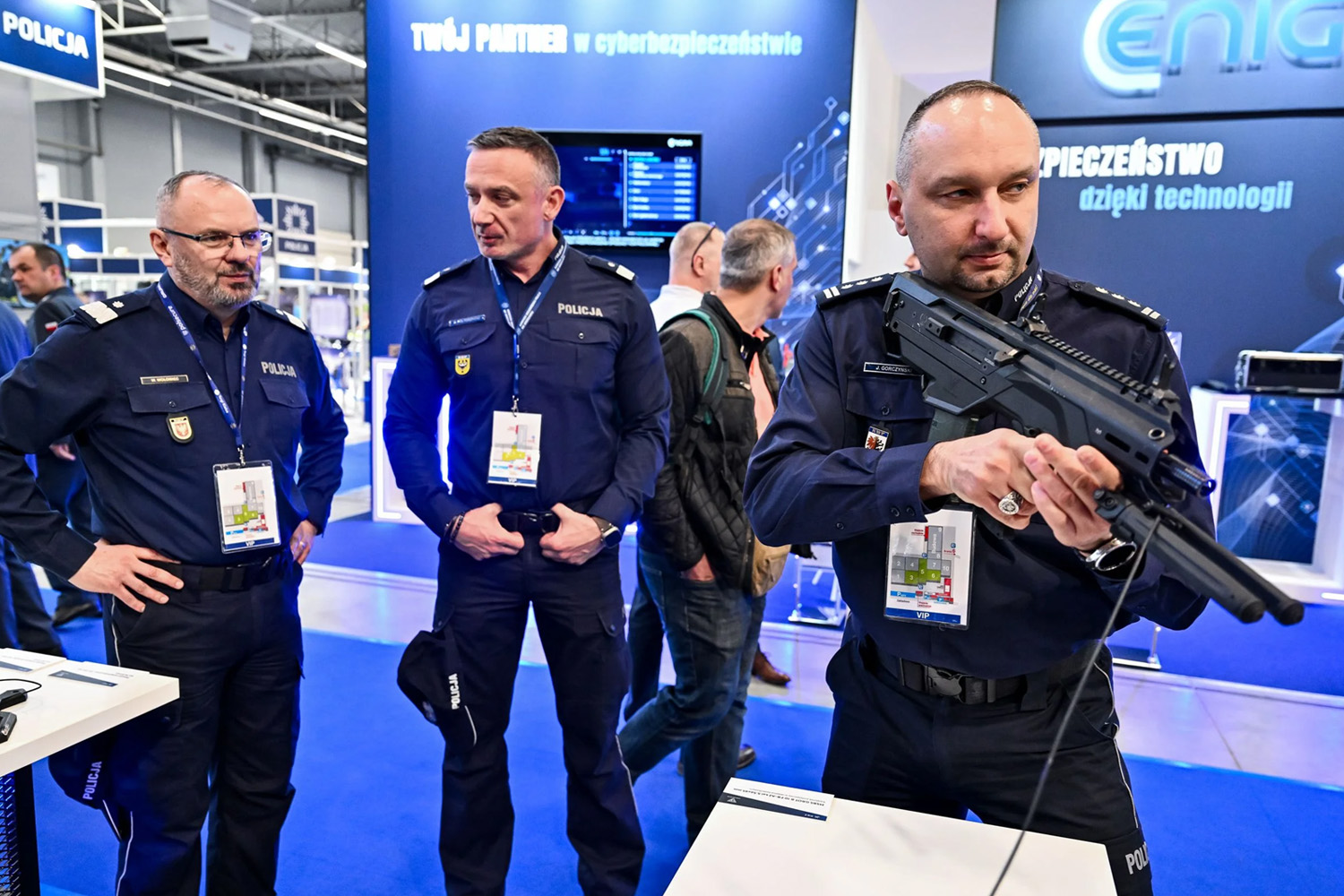
ENLETS was represented at POLSECURE 2026 in Kielce by Jakub Gorczyński, Public Order TIG Leader. The visit offered an opportunity to explore solutions relevant to law enforcement and can help PO TIG better identify technologies worth further attention and exchange within the ENLETS network.


Treść